Articles · Trench Watches of the Great WarWatchShop Wiki
Trench watches · chapter 6
Five facts about trench watches
- 1Bought, not issuedBritish officers in the First World War usually bought their own wristwatches, which jewelers advertised as essential kit.
- 2Glowing dangerLuminous dials were painted with radium compounds, which later proved deadly to many of the workers who applied them.
- 3Shrapnel guardsMetal grilles over the crystal, known as shrapnel guards, protected the glass while leaving the dial visible.
- 4Neutral suppliersSwiss manufacturers sold wristwatches to armies on both sides of the conflict.
- 5A soldier’s souvenirMany veterans kept their trench watches for life, and many were passed down through families.
Spec sheet
A typical trench watch (c. 1916)
- Case
- Silver or nickel, about 33–36 mm
- Lugs
- Wire, soldered to the case
- Dial
- White enamel or black, luminous numerals
- Crystal
- Glass, sometimes with a shrapnel guard or hinged cover
- Movement
- Small manual-wind pocket watch caliber
- Strap
- Leather, often a one-piece strap
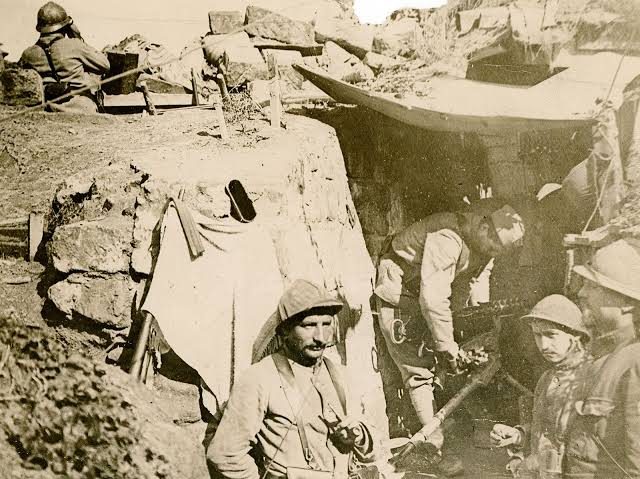
Why it matters
The men who went to war with pocket watches came home with wristwatches, and the world followed them.
The First World War transformed many things: borders, governments, technology and the way people thought about war itself. The wristwatch was a small part of that transformation, but a lasting one. It moved from the margins of fashion to the center of everyday life because millions of men discovered, in the worst of circumstances, how useful it was.
Every wristwatch worn today carries a little of that history. The bold numerals, the luminous hands and the sturdy case of many modern watches are direct descendants of the watches that ticked in the trenches.
Trench Watches of the Great War · Legacy6