Article · The human cost · 1917–1938
The paint that glowed
In the 1910s and 1920s, thousands of young women were hired to paint watch dials with a glowing paint that contained radium. They were told it was harmless. Many of them died, and their struggle for justice became one of the most important workplace health cases of the twentieth century.
A wonder element
In 1898, Marie and Pierre Curie announced the discovery of a new element, radium. It was intensely radioactive, and when mixed with certain compounds, it made them glow in the dark with an eerie greenish light. In the early twentieth century, radium became a sensation. It was hailed as a miracle substance, used in medicine to treat cancer and marketed, with no scientific basis, in tonics, cosmetics, toothpaste and health spas. Few people understood the dangers of radiation.
One practical use of radium seemed especially promising. Mixed with zinc sulfide, a substance that glows when struck by radiation, radium produced a self-luminous paint that glowed continuously without needing to be exposed to light. Applied to the dials and hands of watches, clocks and instruments, it made them readable in total darkness.
Watches for the war
The First World War created an enormous demand for luminous dials. Soldiers in the trenches needed watches they could read at night without showing a light, and aircraft and military instruments needed luminous dials. Companies in the United States, Britain, Switzerland and elsewhere expanded their dial-painting operations rapidly. In the United States, the largest was the United States Radium Corporation, which produced a luminous paint sold under the brand name Undark.
The dial painters
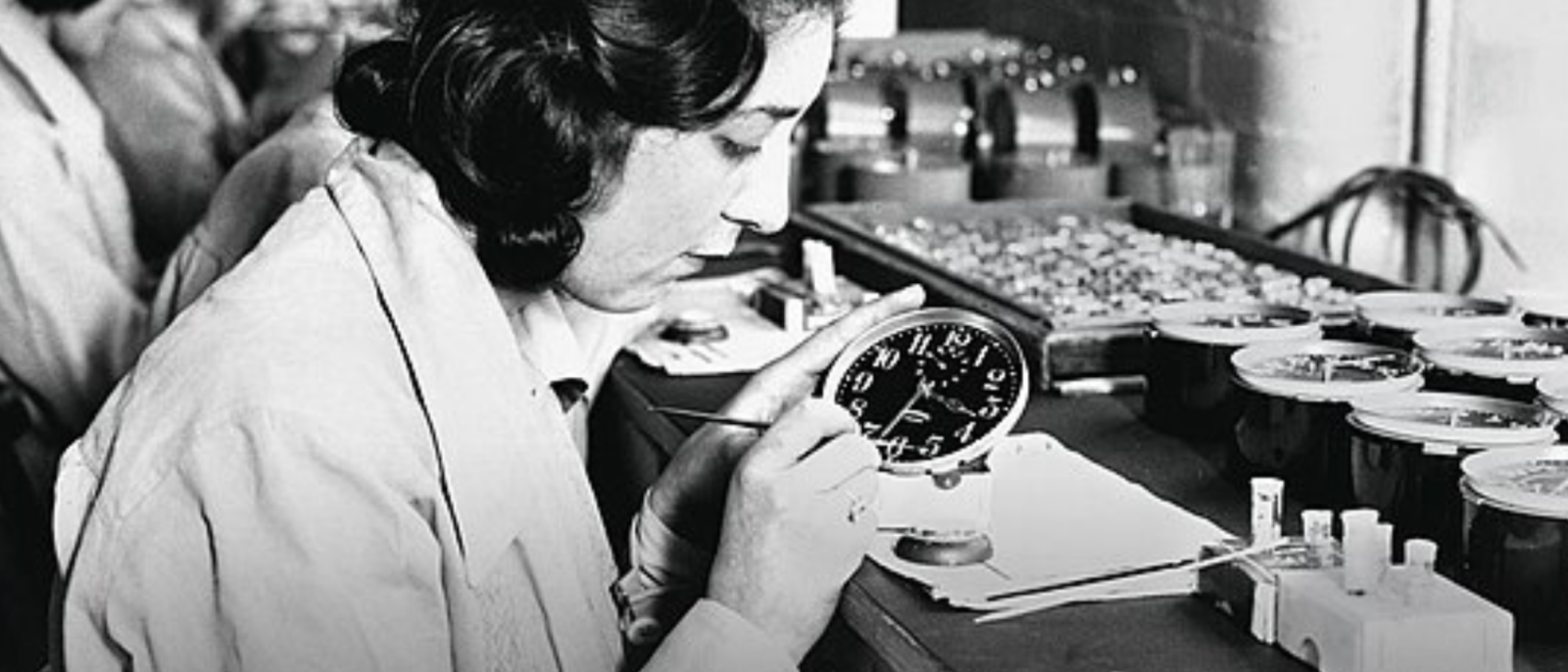
The work of painting dials was delicate, requiring a steady hand and good eyesight, and it was mostly given to young women, many of them teenagers. It was considered a good job: clean, well paid by the standards of the time and even glamorous. The women were paid by the piece, so speed mattered. Many of them came from working-class immigrant families, and the wages helped support their households.
Lip, dip, paint
To paint the fine numerals on a watch dial, the women used small camel-hair brushes. To keep a fine point on the brush, they were taught to shape it with their lips. The routine became known as lip, dip, paint: shape the brush between the lips, dip it in the radium paint, paint a numeral, and repeat. Each time, a small amount of radium was swallowed. Over months and years, the radium accumulated in their bodies.
The women were told the paint was harmless. Some even painted their nails, teeth or faces with it for fun, to glow in the dark. Meanwhile, according to later testimony, scientists and managers at the companies took precautions when handling radium themselves.