Articles · Lindbergh and the Hour Angle WatchWatchShop Wiki
Hour Angle · chapter 8
Five facts about the navigation watches
- 1Worn over the jacketThe Hour Angle watch had a long strap so it could be worn over the sleeve of a thick flying jacket.
- 2Lindbergh’s sketchLindbergh sent his own drawings for the watch to Longines in 1930.
- 3Second-settingThe Weems watch let navigators synchronize the seconds with a radio signal without stopping the watch.
- 4Four seconds, one mileIn celestial navigation, an error of four seconds in time can mean a position error of up to a nautical mile.
- 5Still madeLongines has reissued both the Weems and the Lindbergh Hour Angle watches in modern versions.
Spec sheet
Lindbergh Hour Angle watch (1931)
- Diameter
- about 47.5 mm
- Bezel
- Rotating, graduated in degrees and minutes of arc
- Center disc
- Rotating, for the equation of time
- Strap
- Long, to be worn over a flying jacket
- Maker
- Longines
- Designed with
- Charles Lindbergh
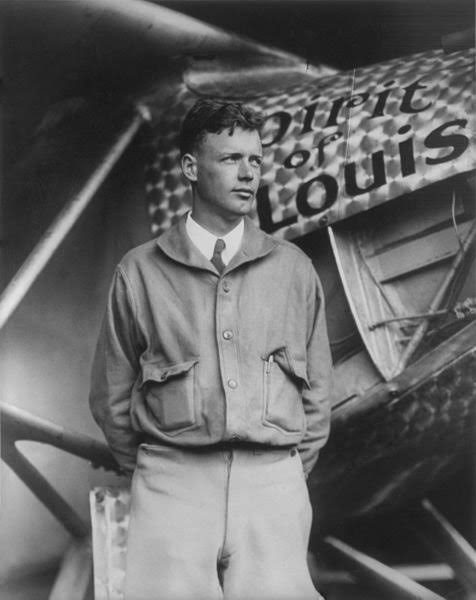
Why it matters
The Hour Angle watch turned a mathematical problem into a glance at the wrist.
The navigation watches of Weems and Lindbergh mark the moment when the wristwatch became a true instrument of aviation. They brought the precision and methods of ocean navigation into the cockpit and adapted them to the speed and conditions of flight.
Many of the features we associate with pilot’s watches today, large cases, legible dials, big crowns and rotating bezels, can be traced back to these designs. They were made for a world in which a pilot over an empty ocean had only the stars, a sextant and a watch to guide him home.
Lindbergh and the Hour Angle Watch · Legacy8