Articles · Railroad Time and the Kipton WreckWatchShop Wiki
Railroad time · chapter 6
Five facts about railroad time
- 1Dozens of timesBefore 1883, there were dozens of different railway times in use in the United States, and some large stations displayed several clocks.
- 2Britain went firstThe Great Western Railway adopted London time in 1840. Station clocks in some towns were fitted with two minute hands, one for local time and one for railway time.
- 3Inspectors everywhereUnder the railroad standards, local jewelers across the continent served as official watch inspectors, checking employees’ watches at regular intervals.
- 4A watch for lifeMany railroad men bought one high-grade watch and carried it for an entire career. These watches often passed down through families.
- 5The law came laterThe United States made standard time zones official only with the Standard Time Act of 1918, thirty-five years after the railroads adopted them.
Spec sheet
Hamilton 992B (1940)
- Size
- 16 size, open face
- Jewels
- 21
- Adjustment
- Temperature and six positions
- Setting
- Lever set
- Dial
- White, black Arabic numerals
- Status
- One of the most popular railroad watches of all
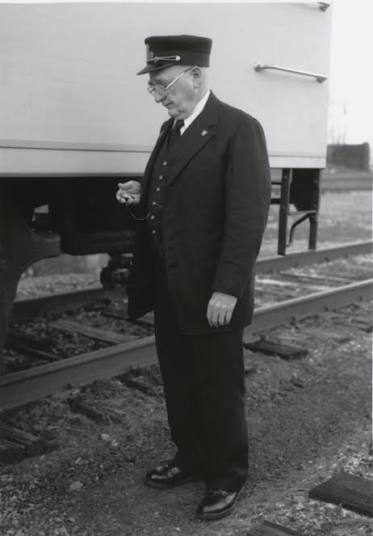
Why it matters
The railway taught the world to share a single time, and the railroad watch made sure everyone kept it.
The Kipton wreck was a local tragedy, but its consequences were national and lasting. The standards that followed turned the pocket watch into a certified instrument, created a network of inspection and pushed manufacturers to their limits. They also helped make punctuality a modern virtue.
Today, smartphones and satellite signals keep time for us, and railways rely on electronic systems rather than watches. But the principle established after 1891, that safety depends on accurate, regularly checked time, is still at the heart of transport systems everywhere.
Railroad Time and the Kipton Wreck · Legacy6