Articles · The Perpetual CalendarWatchShop Wiki
Perpetual calendar · chapter 8
Five facts about perpetual calendars
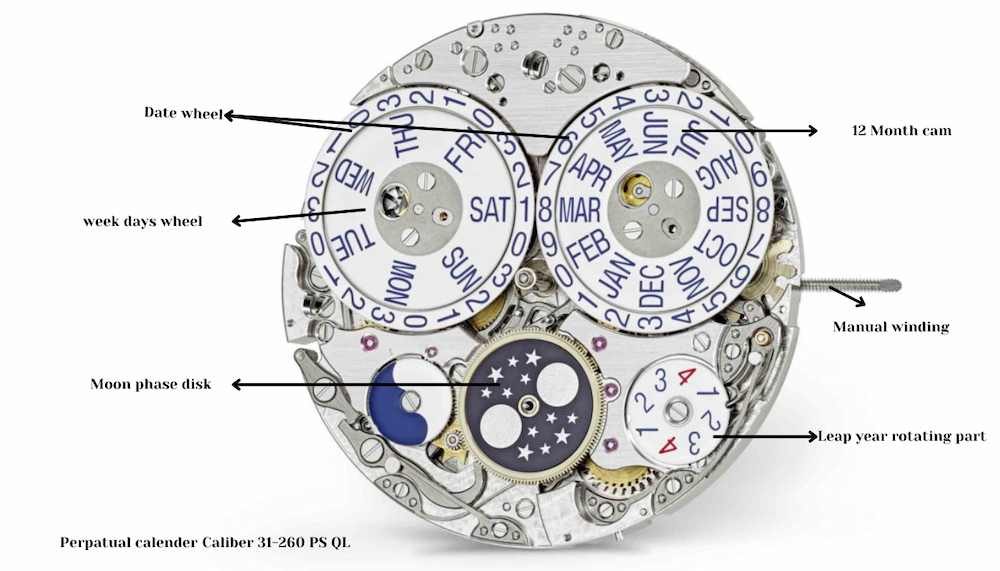
- 1Four years in one wheelThe program wheel of a typical perpetual calendar turns once every four years, one step per month.
- 2From a pendantThe first perpetual calendar wristwatch, Patek Philippe No. 97975, used a movement first made for a lady’s pendant watch.
- 3Four in steelOnly four stainless steel examples of the Patek Philippe reference 1518 are known.
- 4The 2100 problemMost perpetual calendars will need a one-day correction in 2100, a year that will not be a leap year.
- 5Crown settingIWC’s Da Vinci of 1985 was one of the first perpetual calendars that could be set through the crown alone.
Comparison
Calendar complications
- Simple calendar
- Correction at the end of every short month
- Annual calendar
- Correction once a year, at the end of February
- Perpetual calendar
- Correct until 2100
- Secular perpetual
- Correct for centuries
Why it matters
A perpetual calendar is a small piece of mechanical intelligence, and a reminder that our calendar is stranger than we think.
The perpetual calendar connects the watch on the wrist with some of the oldest problems of human civilization: measuring the year, organizing time and keeping the calendar in step with the heavens. From the great astronomical clocks of medieval cathedrals to Mudge’s pocket watch and today’s wristwatches, it represents the ambition to capture the order of time in a machine.
It is also a deeply practical complication. Unlike some showpieces, it does something useful every day. That combination of intellectual satisfaction and everyday utility explains why it remains one of the most beloved complications in fine watchmaking.
Sources and further reading
Last reviewed October 12, 2026. Spotted a mistake? Tell us.
The Perpetual Calendar · Legacy8