Article · Design history · 1930–1931
A watch that turns its back
In 1930, a businessman visiting India heard a complaint from British officers: their watch crystals kept breaking during polo matches. Within a year, a French engineer had patented a case that could flip over to protect the dial. The Reverso was born.
A sport of empire
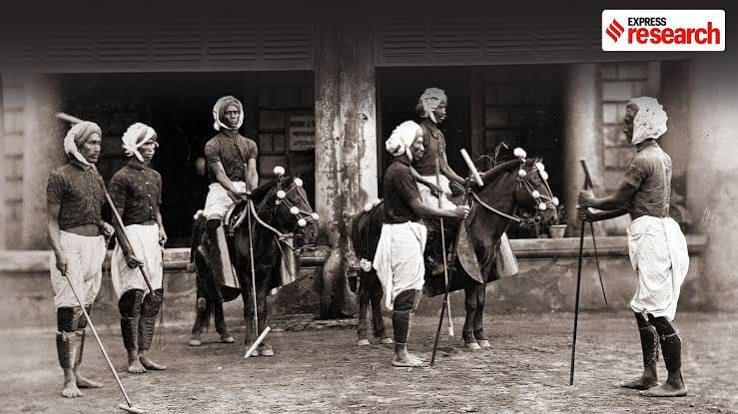
Polo is one of the oldest team sports in the world, with origins in Persia and Central Asia. British officers encountered it in India in the nineteenth century and adopted it enthusiastically. By the early twentieth century, polo was the sport of choice for officers of the British Army in India and for the Indian princes who played alongside them. It was fast, dangerous and prestigious.
It was also hard on watches. Players swung long mallets at a hard ball while riding at speed, and collisions between horses, mallets and players were common. A wristwatch on the arm of a polo player was exposed to blows from mallets and balls, and its glass crystal, in those days made of mineral glass that shattered easily, often did not survive a match.
The challenge
According to the story told by the company that makes the Reverso, in 1930 a Swiss businessman named César de Trey was visiting India. De Trey was a dealer in watches and dental supplies with connections to the Swiss watch industry. During a visit to a polo club, a British officer showed him a watch with a broken crystal and challenged him to find a solution: a wristwatch robust enough to survive a polo match.
De Trey took the challenge back to Europe. He discussed it with Jacques-David LeCoultre, head of the LeCoultre manufacture in the Vallée de Joux, one of Switzerland’s most respected movement makers. LeCoultre had ties with Paris through his partnership with Edmond Jaeger, a French maker who supplied movements for Cartier. The problem was passed to Paris.
A reversible idea
The solution came from René-Alfred Chauvot, a French engineer and designer. His idea was not to make the crystal stronger, but to hide it. He designed a watch case that could slide sideways in a frame and turn over completely, so that the dial faced inward, toward the wrist, and the solid metal back faced outward. Before a match, the player could flip the case and protect the crystal. After the game, he could flip it back and read the time.
On 4 March 1931, Chauvot filed a patent in Paris for a watch able to slide in its support and be completely turned over. The design was acquired by de Trey and LeCoultre, and the watch was named the Reverso, from the Latin for turned around.