Articles · The Reverso and the Polo Fields of IndiaWatchShop Wiki · Vol. 2
Reverso · chapter 8
Five facts about the Reverso
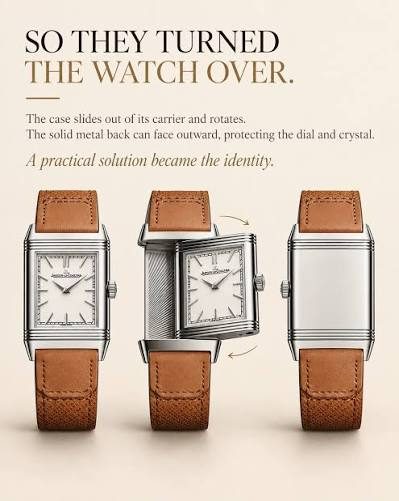
- 1Latin nameReverso comes from the Latin for turned around, a reference to the reversible case.
- 2French engineerThe reversible case was patented in Paris by René-Alfred Chauvot on 4 March 1931.
- 3Engraved secretsFrom the beginning, owners had the backs of their Reversos engraved with initials, crests and private messages.
- 4Two facesModern double-faced Reversos have a dial on each side, often showing two time zones.
- 5Rediscovered in ItalyThe Reverso’s revival began when old cases were found and sold in Italy in the 1970s.
Spec sheet
The original Reverso (1931)
- Shape
- Rectangular, Art Deco style
- Case
- Reversible, sliding in a cradle
- Signature detail
- Three gadroons at each end
- Movement
- Manual-wind rectangular caliber
- Inventor
- René-Alfred Chauvot
- Purpose
- Protecting the crystal during polo
Why it matters
The Reverso proved that a practical solution could become a timeless design.
Few watches have a story as charming as the Reverso’s, or a design that has lasted so well. It began as a solution to a problem faced by a small group of polo players and became an icon of elegance for people who never touched a polo mallet.
Its history also illustrates the way the watch industry works: an idea from one place, a patent in another, movements from a specialist manufacture, and a story that turns a product into a legend.
The Reverso and the Polo Fields of India · Legacy114