Article · Famous watches · 1783–2007
The queen’s watch that she never saw
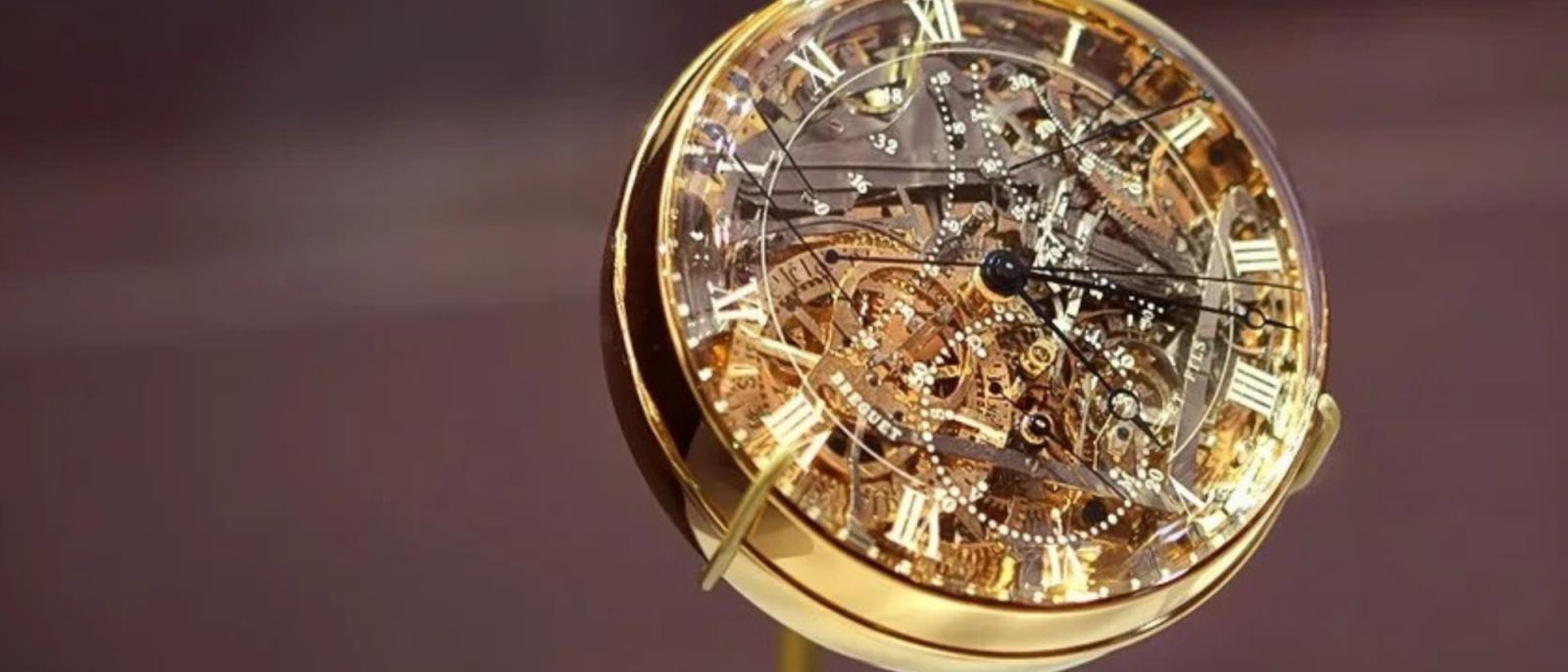
In 1783, someone asked Abraham-Louis Breguet to make the most complicated watch in the world for the Queen of France, with no limit on time or cost. The queen died long before it was finished. Its story since then has been almost as dramatic as hers.
An extraordinary order
Sometime in 1783, the workshop of Abraham-Louis Breguet on the Quai de l’Horloge in Paris received an order unlike any other. The client was said to be an officer of the queen’s guard, an admirer of Marie Antoinette, who wanted to present her with a watch. The instructions, as handed down by the Breguet house, were simple and astonishing. The watch was to include every complication known at the time. Wherever possible, gold was to replace other metals. And there was to be no limit on the time or the money spent.
Who the admirer was has never been established with certainty. A popular theory names the Swedish count Axel von Fersen, a close friend of the queen and widely rumored to be her lover. There is no direct proof, and Breguet’s records do not name the client. The mystery has only added to the watch’s legend.
A queen who loved Breguet
Marie Antoinette was already a client and admirer of Breguet. She owned several of his watches, including one of his early self-winding perpétuelles, and her patronage helped establish his reputation at court. A watch combining every complication would be the ultimate demonstration of his skill, and the ultimate gift for a queen who loved beautiful and ingenious objects.
Breguet assigned the watch the number 160 in his records. Work began, and it proceeded slowly, as it was bound to with a mechanism of such complexity. Then history intervened.
Revolution
In 1789 the French Revolution began. In 1792 the monarchy was abolished, and in October 1793 Marie Antoinette was guillotined in Paris. The watch was still unfinished. Breguet himself fled to Switzerland during the Terror, and when he returned in 1795, his workshop had to be rebuilt. Work on No. 160 was interrupted for years at a time.
Breguet died in 1823, with the watch still incomplete. His son, Antoine-Louis, took up the task and finally completed it in 1827, forty-four years after the commission and thirty-four years after the death of the queen for whom it was intended. By then, its intended owner, its designer and the world they had lived in had all passed into history.