Articles · The Marie Antoinette WatchWatchShop Wiki · Vol. 2
Marie Antoinette · chapter 6
Five facts about Breguet No. 160
- 1Unknown patronNo document confirms who ordered the watch. The theory that it was Axel von Fersen remains a theory.
- 2Gold wherever possibleThe order asked for gold to replace other metals whenever it could. In practice, steel was still needed for springs and other working parts.
- 3One thief, many treasuresNa’aman Diller took around a hundred clocks and watches in 1983, as well as other objects. Most were recovered after 2006.
- 4A second masterpieceThe reconstruction No. 1160 was presented by Breguet in 2008, after several years of work.
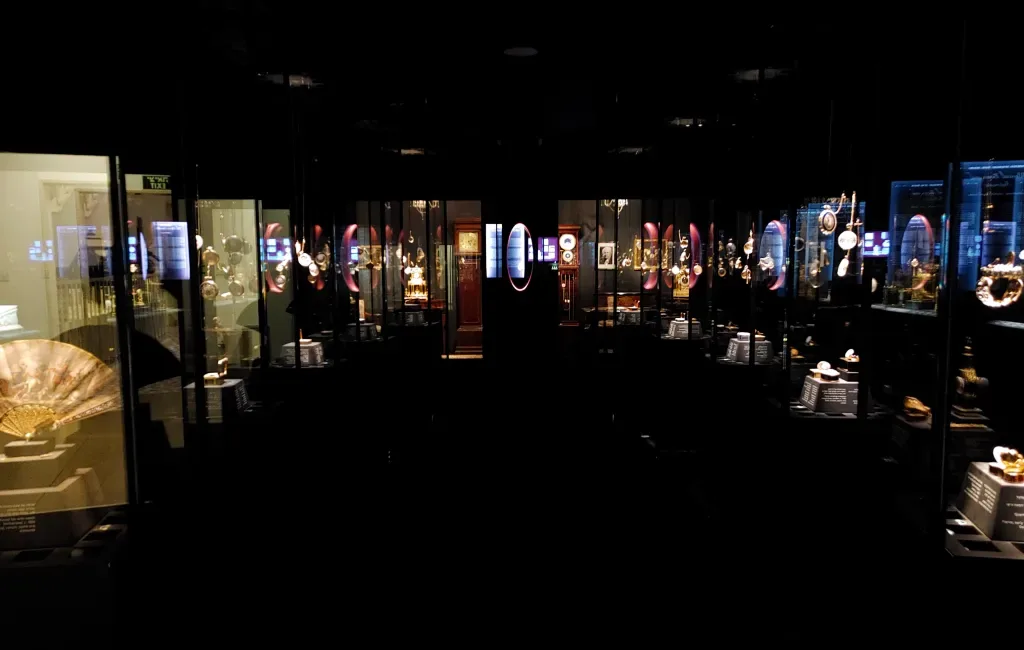
- 5Back on displayThe original is once again shown at the L.A. Mayer Museum for Islamic Art in Jerusalem, together with other Breguet pieces from the Salomons collection.
Spec sheet
Breguet No. 160
- Ordered
- 1783
- Completed
- 1827
- Case
- Gold, about 63 mm
- Dial
- Rock crystal
- Winding
- Self-winding (perpétuelle)
- Complications
- Perpetual calendar, minute repeater, equation of time, power reserve, thermometer, independent seconds
- Parts
- 823, by the usual count
Why it matters
No other watch carries so much history: a queen, a revolution, a genius, a collector, a thief and a happy ending.
Breguet No. 160 is often called the Mona Lisa of watches. The comparison is not only about value. Like the painting, the watch is famous partly for what it is and partly for what has happened to it. It was born of royal extravagance, delayed by revolution, completed as a tribute to a dead master, preserved by a collector, stolen in a sensational theft and recovered after a confession from beyond the grave.
For watch lovers, it remains a reminder that complications began as solutions to real problems, and that the greatest watches are as much works of history as of mechanics.
Sources and further reading
Last reviewed October 10, 2026. Spotted a mistake? Tell us.
The Marie Antoinette Watch · Legacy37