Articles · The Geneva Seal and the Swiss Made LabelWatchShop Wiki · Vol. 2
Marks of quality · chapter 6
Five facts about watch marks
- 1Made in GermanyThe British law of 1887 that forced Germans to mark their goods helped turn Made in Germany into a sign of quality, the same thing that happened to Swiss Made.
- 2A dog for goldSince 1995, Swiss precious-metal watch cases have carried a small control mark showing the head of a Saint Bernard dog.
- 3T Swiss Made TFrom the 1960s to the late 1990s, some dials read T Swiss Made T or Swiss T<25, indicating luminous material containing tritium, a radioactive isotope used in small quantities.
- 4A register for every watchSince the 2012 reform, every watch carrying the Geneva Seal can be checked against an official register.
- 5Defending the labelThe Swiss watch industry federation pursues legal action against misuse of the Swiss Made label in dozens of countries each year.
At a glance
What each mark guarantees
- Geneva Seal
- Made in Geneva, fine finishing, tested performance
- Swiss Made
- Swiss origin under federal rules
- Chronometer (COSC)
- Movement precision tested
- Master Chronometer
- Cased watch precision and antimagnetism
- Metal hallmarks
- Purity of gold, silver or platinum
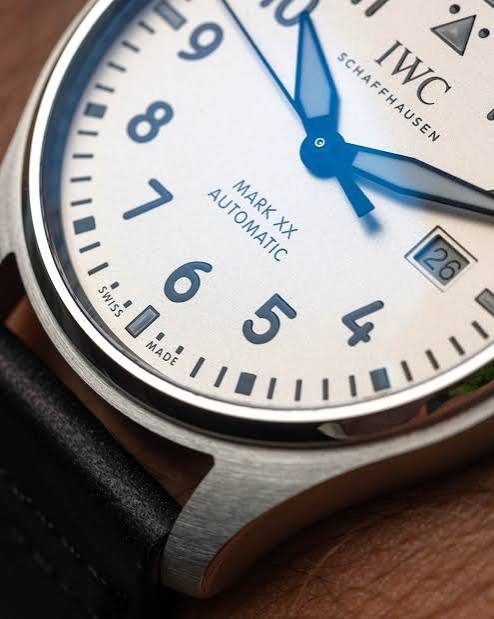
Why it matters
A mark is a story told in a few millimeters: where a watch comes from, who stands behind it and what it promises.
The marks on a watch are easy to overlook, but they are the result of long struggles over quality, honesty and identity. The Geneva Seal reflects the pride of a city’s craftsmen in work that most people would never see. The Swiss Made label reflects a nation’s effort to protect an industry that is central to its economy and its image.
For anyone buying a watch, knowing what these marks mean, and what they do not mean, is a small but useful piece of knowledge. For anyone interested in history, they offer a window onto the way trade, law and craftsmanship have shaped the objects on our wrists.
The Geneva Seal and the Swiss Made Label · Legacy66