Article · Marks of quality · 1886–today
A promise engraved in metal
A watch is too small and too complex for a buyer to judge by eye. For more than a century, the Swiss have answered that problem with marks: little symbols and words that guarantee where a watch was made and how well.
The problem of trust
When you buy a watch, you are trusting what you cannot see. The movement is hidden behind a caseback. Even if you open it, the quality of its parts, the precision of its adjustment and the origin of its components are hard to judge without training and instruments. In the nineteenth century, as the watch trade became global, the problem grew. Watches were made in one place, cased in another, sold in a third and often signed with names that had little to do with their real makers.
Fraud was widespread. Cheap watches were dressed up with prestigious-sounding names. Watches made elsewhere were sold as Swiss or English. Genevan watchmakers, whose reputation for quality had been built over three centuries, saw their name used on goods that had never been near the city. Something had to be done to protect both buyers and honest makers.
Two answers
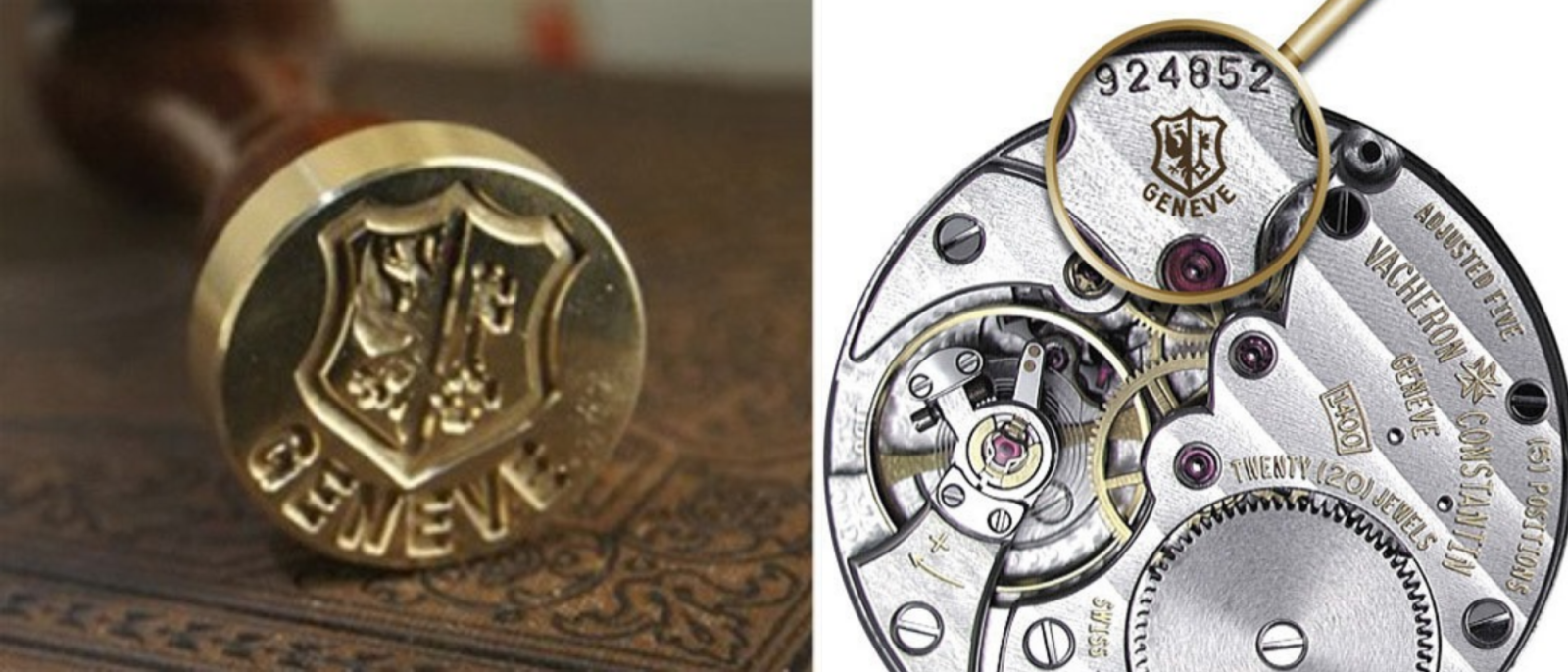
Switzerland developed two quite different answers. The first, the Geneva Seal, was local, voluntary and demanding. Created by the canton of Geneva in 1886, it certified that a movement had been made and finished in Geneva to a defined standard of quality. It was a hallmark of excellence, applied only to a small number of high-grade watches.
The second, the Swiss Made label, was national and much broader. It grew out of the requirements of foreign markets for marks of origin in the late nineteenth century and was eventually defined in federal law in 1971. It did not certify excellence; it certified origin. But in the eyes of buyers around the world, the two words Swiss Made came to stand for quality just as much as the eagle and key of Geneva.
Why marks matter
Hallmarks have a long history in the precious-metals trade, where they guarantee the purity of gold and silver. The watch marks follow the same logic, but they guarantee something more complicated: workmanship, origin and, in the case of the modern Geneva Seal, performance. They are a way of turning reputation into a legal and measurable promise. Understanding them helps explain how Swiss watchmaking has defended its position for so long, and why debates about them have sometimes been fierce.