Articles · The B-Uhr: Observation Watches of the Air WarWatchShop Wiki
B-Uhr · chapter 8
Five facts about the B-Uhr
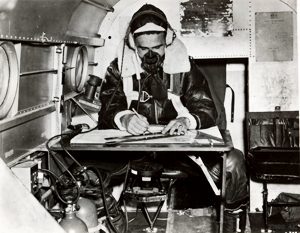
- 1Observer means navigatorIn German air force terminology, the observer was the crew member responsible for navigation, hence the name observation watch.
- 2Over the jacketThe long strap of the B-Uhr was designed to be worn over a thick flying jacket.
- 3A Swiss makerIWC, in neutral Switzerland, supplied around a thousand large pilot’s watches to the German air ministry in 1940.
- 4Stop the secondsPulling the crown stopped the seconds hand, allowing navigators to synchronize their watches exactly.
- 5The templateMost pilot’s watches made today with a triangle at twelve trace their design back to the B-Uhr.
Spec sheet
B-Uhr (typical)
- Diameter
- 55 mm
- Case
- Steel or nickel-plated, with large onion crown
- Dial
- Type A or Type B, luminous
- Movement
- Large hand-wound, central seconds, hacking
- Precision
- Chronometer standard
- Marking
- FL 23883
- Makers
- A. Lange & Söhne, Wempe, Laco, Stowa, IWC
Why it matters
The B-Uhr gave the pilot’s watch its face. Almost every flieger watch since has looked back at it.
The B-Uhr was a tool made for war, and it belongs to a dark period of history. Its story should be told with that in mind. But as an object, it represents a pure expression of a design problem: how to make time readable, precisely and quickly, under the most difficult conditions.
Its influence on watch design has outlasted the regime that commissioned it. Today, its dial layouts are used by watchmakers around the world on watches made for peaceful purposes, a reminder that good design can be separated from its origins.
The B-Uhr: Observation Watches of the Air War · Legacy8