Article · Underwater · 1926–1953
Into the deep
The dive watch did not appear fully formed in 1953. It grew over a quarter of a century from waterproof cases, naval experiments and the first amateur divers, until the needs of a new sport finally defined what it should be.
A hostile world for a watch
Water is the natural enemy of a mechanical watch. Even a small amount of moisture inside the case causes rust, damages the oil and ruins the movement. Under water, the problem is multiplied by pressure: every ten meters of depth adds another atmosphere of pressure, pressing water against every joint of the case. A watch that survives a rain shower may fail completely at a few meters below the surface.
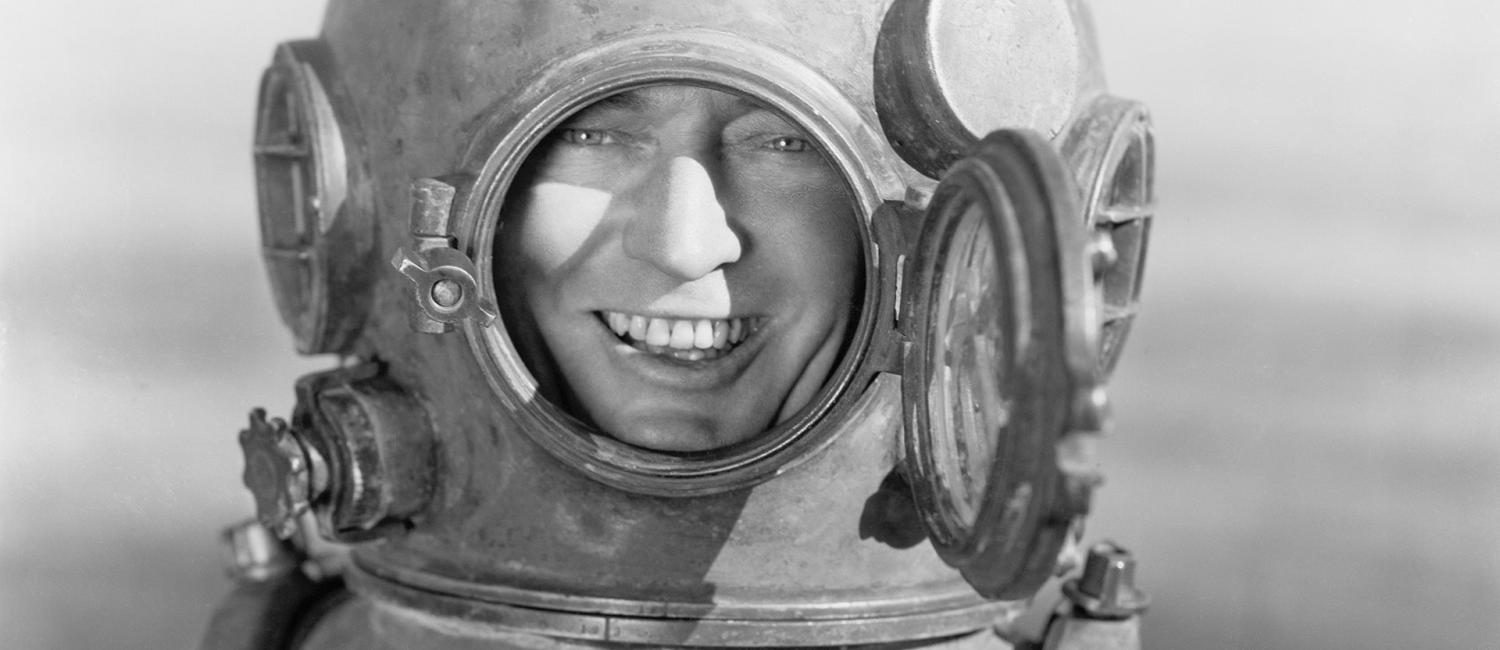
In the early twentieth century, almost no one needed a watch underwater. Professional divers in heavy helmets and canvas suits worked on harbor construction, salvage and pearl fishing, but they were connected to the surface by air hoses and lifelines, and their time underwater was managed from above. The idea of a watch made for diving barely existed.
Why divers need time
This changed with the development of independent diving. A diver breathing from a tank of compressed air has a limited supply. He must know how long he has been underwater, to manage his air and to avoid decompression sickness, the dangerous condition caused by surfacing too quickly after a long or deep dive. Divers began to need watches that could survive depth and show elapsed time clearly. Military divers, especially, needed to time their operations precisely.
Three steps
The road to the modern dive watch passed through three steps. First came waterproof cases, which could keep out water in everyday conditions and, increasingly, at depth. Second came watches designed specifically for divers, with stronger cases and luminous dials, often for military use. Third came the rotating bezel, which allowed divers to measure their elapsed time at a glance. When all three came together in the early 1950s, the modern dive watch was born.
The pioneers
The pioneers of this story include Rolex, with its Oyster case of 1926; Omega, with its Marine of 1932; the Italian firm Panerai, with its watches for naval divers from the late 1930s; and the naturalists, naval officers and adventurers who took these watches into the sea. Their experiments laid the foundations on which the famous dive watches of the 1950s were built.