Article · The automatic watch · 1770–1960
A watch that never needs winding
Winding a watch every day was a chore, and forgetting meant a stopped watch. For two hundred years, inventors chased the idea of a watch powered by its owner’s own movements. Their story ends in the rotor that turns inside most mechanical watches today.
The daily ritual
Every mechanical watch is powered by a mainspring, a coiled strip of steel that slowly releases its energy to drive the wheels. For most of the history of the watch, the owner wound this spring by hand, turning a key or, from the nineteenth century, the crown. A typical pocket watch ran for about thirty to forty hours on a full winding, so it had to be wound every day, usually at the same time, to keep it running and to keep its rate steady.
Winding was a small ritual, but it had disadvantages. If you forgot, the watch stopped. If you wound it unevenly, its timekeeping suffered, because a mainspring delivers more force when fully wound than when nearly run down. Every winding also meant opening the watch or working the crown, which allowed dust and moisture to enter and wore the parts.
Energy from motion
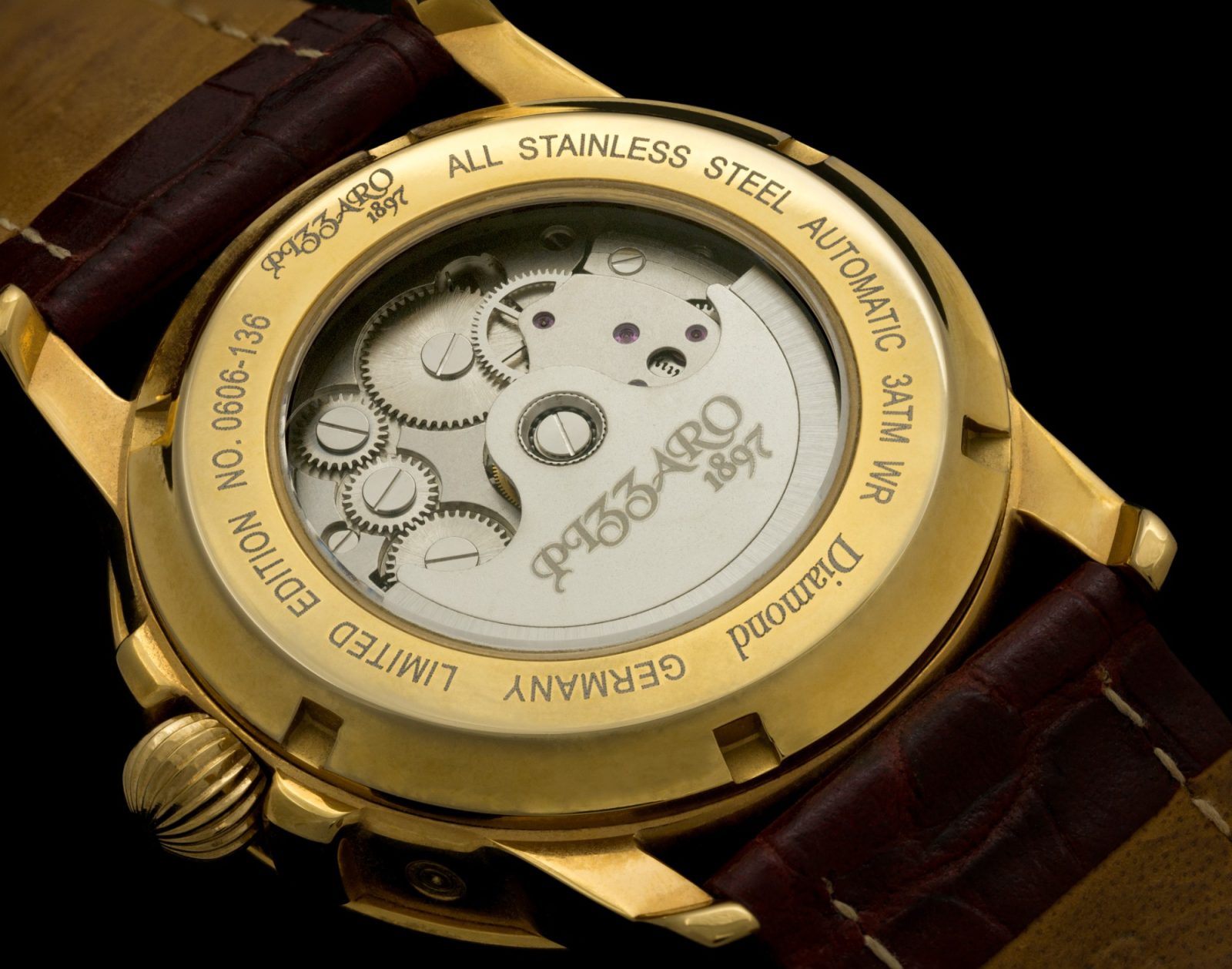
The idea of a self-winding watch was simple: use the motion of the wearer to wind the mainspring automatically. A small weight inside the watch, free to swing as the owner moved, could be linked to the winding mechanism. As long as the watch was worn, it would keep itself wound.
The difficulty lay in the details. The weight had to be heavy enough to wind the spring but light enough to fit in a watch. The mechanism had to work with the irregular, gentle motions of a person walking or moving an arm. It had to stop winding when the spring was full, to avoid breaking it. And it had to be reliable enough to justify the added complexity and cost.
Three eras
The history of the self-winding watch falls into three eras. In the late eighteenth century, a few brilliant makers built self-winding pocket watches, ingenious but rare. In the 1920s, after the wristwatch had become popular, inventors returned to the idea, because a watch on the wrist moves far more than one in a pocket. And from the 1930s to the 1950s, a series of improvements, above all the central rotor, made the automatic watch practical, reliable and eventually standard.