Articles · The Oyster and Mercedes GleitzeWatchShop Wiki
Oyster · chapter 7
Five facts about the Oyster
- 1Named for a shellfishWilsdorf chose the name Oyster because the case closed as tightly as an oyster’s shell.
- 2Front-page newsThe Rolex advertisement of 24 November 1927 occupied the front page of the Daily Mail, an unusually bold placement for a watch.
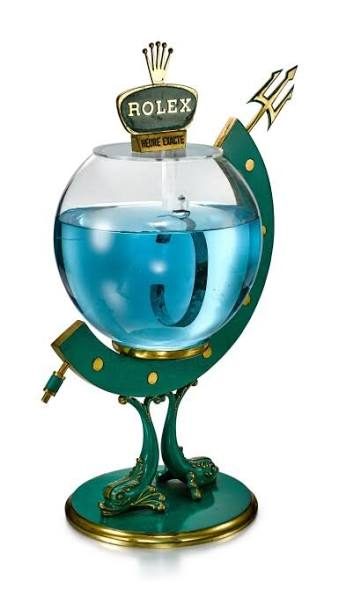
- 3Aquarium displaysJewelers displayed Oyster watches submerged in water tanks in their shop windows to prove they were waterproof.
- 4Gibraltar tooIn 1928 Mercedes Gleitze became, by most accounts, the first person to swim the Strait of Gibraltar.
- 5Still the foundationAlmost every Rolex sold today is an Oyster, built on the principles patented in 1926.
Spec sheet
Rolex Oyster (late 1920s)
- Case
- Cushion-shaped, steel, silver or gold
- Bezel
- Screwed to the case
- Caseback
- Screwed down with a seal
- Crown
- Screw-down
- Movement
- Manual wind (self-winding from 1931)
- Proven by
- Mercedes Gleitze, 21 October 1927
Why it matters
A waterproof case changed what people expected from a watch: not just to keep time, but to survive life.
The Oyster solved a fundamental problem of the wristwatch: its vulnerability to the elements. Its principles were adopted, adapted and refined across the industry, and today we take water resistance for granted in almost any watch. The Submariner, the Explorer and many other famous watches are built on the Oyster’s foundations.
Mercedes Gleitze’s swim gave the invention a human face. It showed that the best way to sell a watch was not simply to describe it, but to tell a story of what it could survive.
The Oyster and Mercedes Gleitze · Legacy7