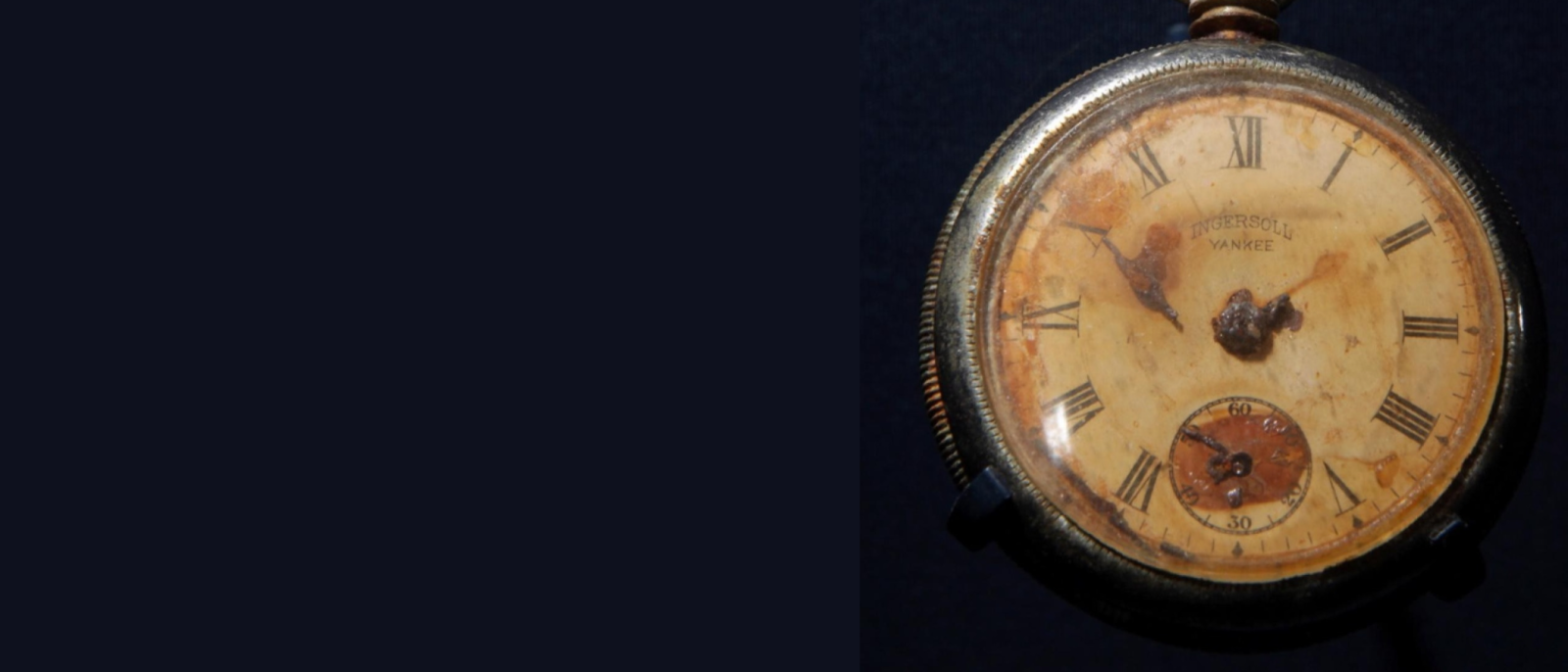
Article · The democratic watch · 1867–1950
A watch for everyone
For most of history, a watch was a sign of wealth. At the end of the nineteenth century, a handful of manufacturers decided to make one that a farmhand or a factory worker could buy with a day’s pay. They succeeded beyond anyone’s expectations.
The price of time
In the middle of the nineteenth century, even a basic watch was expensive. A good English or Swiss pocket watch might cost several weeks or months of a worker’s wages. Factory production, pioneered by Waltham in the United States, had lowered prices, but a reliable watch was still beyond the reach of most working people. Those who needed to know the time relied on church bells, factory whistles and public clocks.
This was increasingly a problem. Industrial work ran to strict schedules. Railways, factories and offices demanded punctuality. A worker who arrived late could lose pay or his job. The need for personal time was growing among exactly the people who could least afford it.
Three approaches
Three very different efforts answered this need. In Switzerland, a watchmaker named Georges-Frédéric Roskopf set out in the 1860s to design a watch for the working class, simplified to the bare essentials. In the United States, the Waterbury Clock Company of Connecticut, which made cheap clocks in enormous numbers, began making watches using clock-factory methods. And in New York, two brothers, Robert and Charles Ingersoll, built a business around selling a watch for one dollar.
Together, these efforts created a new category: the inexpensive mass-market watch. Its descendants include the Timex, the Swatch and countless other affordable watches. In a real sense, they made the watch democratic.
Simple, not shoddy
The dollar watch was not simply a cheap copy of a good watch. It was a different kind of object, designed from the start for low-cost production. Its makers removed everything that was not essential: jewels, fine finishing, adjustable regulation, precious metal cases. They used stamped parts, simplified escapements and as few components as possible. The watches were not precise by the standards of a railroad watch, but they were accurate enough for daily life, and they were cheap enough that if one broke, it could simply be replaced.